
How Healthcare Websites Build Patient Trust and Increase Bookings
Patients decide whether to trust a medical practice long before they ever speak to a receptionist .
View ArticleMove your website to a new platform, hosting provider, server or cloud environment with a migration plan built around your business. We transfer your content and data, check functionality and compatibility, and manage redirects and SEO, so every step is planned, tested and verified.


Years in web development
Projects delivered
Clients worldwide
Countries served
Moving a website involves more than copying files. Your pages, media, databases, integrations, URLs and search visibility all need to reach the new environment in working order. We plan every migration around your current technology, your destination platform and what your business needs to keep running.
Each project combines a website assessment, structured data transfer, compatibility checks, SEO and URL management, and testing before and after launch, so your website moves with fewer surprises and a clear plan at every stage.

We move pages, images, media files, databases and other important content to the new environment in an organised, verified way.

We compare the source and destination technologies to find features that need to be configured, replaced or rebuilt after the move.

Navigation, forms, plugins, integrations and key features are reviewed so the migrated website works the way your visitors expect.

URL mapping, 301 redirects, metadata, internal links and indexability are planned to reduce avoidable search visibility issues.

Full backups are taken before migration begins, and SSL, access settings and secure configuration are set up on the new environment.

Pages, links, layouts, forms and integrations are checked before and after launch to confirm the website works as intended.
Move your website, data, domain or business email to a new environment with an approach matched to your technology.
Each service is scoped around what needs to move and what needs to keep working.
Move website files, databases and settings from one hosting provider to another, with compatibility checks.
Transfer websites and applications to new servers or cloud platforms, with dependencies and configuration in place.
Manage domain transfers, DNS records, hosting connections and SSL setup so your website stays reachable.
Move data between databases and environments with attention to data integrity and application connectivity.
Move business mailboxes between email providers, with the DNS and delivery settings needed to keep mail flowing.
Plan URL mapping, redirects, canonicals, sitemaps and indexability to protect search visibility during the move.
Explore our WordPress and WooCommerce migration services for Wix, Shopify, Squarespace, Magento and more.
Moving a website to a different platform requires an approach based on the existing technology, destination platform, content structure, and required functionality.
Explore our existing services for moving websites from different platforms to WordPress.
Explore our platform-specific migration solutions for moving online stores to WooCommerce.
The migration scope depends on the source platform, available data-transfer methods, destination requirements, and functionality that needs to be retained.
A clear 7-step migration process, so you know what is moving, when and what comes next.
We review your current website, source technology, content, integrations, hosting and migration goals.
We list the content, data, URLs, features and settings to transfer, and map old URLs to their new pages.
We move the agreed pages, media, databases and supported data to the destination environment securely.
We set up the new environment and check plugins, integrations and features for compatibility and stability.
We verify redirects, metadata, internal links, canonicals, sitemaps and indexing settings before go-live.
We test key pages, forms and functionality, then complete DNS changes and launch the migrated website.
After launch, we check for broken links, missing content, crawl errors and indexing issues that need fixing.
Share your current setup and where you want to move, and we’ll recommend the right migration approach.

Client Review: “The website migration process was smooth and hassle-free. Our website was moved to the new platform without major downtime, and all our pages, images, and links were working perfectly. The team also ensured our SEO rankings were protected throughout the migration.
We wanted to migrate our website to a better platform, and the team handled everything professionally. All our website content and data were transferred securely, and the new website performs much better than before. Highly satisfied with the overall experience.
Migrating our eCommerce website seemed complicated, but the entire process was managed efficiently. Our product listings, customer details, and order history were transferred successfully. The new store is faster, more stable, and easier to manage.
Our website needed a complete migration, and we were concerned about losing traffic and important data. The team ensured a smooth transition with minimal disruption. The new website works seamlessly across devices, and the migration was completed with great attention to detail.
Website migration services move a website’s content, data or technical setup from one platform, host, server or environment to another. This can include files, databases, domains, DNS, email and SEO elements such as URLs and redirects, planned so the website keeps working after the move.
Moving to a new host usually involves a full backup, transferring website files and databases, configuring the new server, testing the site before going live and then updating DNS. We handle each step and coordinate the switch to keep downtime to a minimum.
Yes, in most cases. Websites can move from platforms like Wix, Squarespace, Shopify or Drupal to WordPress or WooCommerce. Some features may need to be configured or rebuilt on the new platform, and the migration plan sets this out before work begins.
It can, if URLs, content, redirects or indexing settings change. We reduce avoidable risk with URL mapping, 301 redirects, metadata checks, sitemap updates and post-launch monitoring. Careful planning protects your SEO foundation, but no migration can guarantee rankings.
Downtime is usually kept to a minimum. We set up and test the website in the new environment first, then switch DNS at a planned time. DNS changes can take a few hours to update everywhere, which we plan around.
It depends on website size, technical complexity, data volume, integrations and testing needs. A simple hosting move is often quicker than a platform or eCommerce migration. You get a clear timeline after our initial assessment.
Pricing depends on the platforms involved, website size and complexity, data-transfer requirements and the configuration and testing needed. Share your current setup and goals, and we’ll send a clear quote before work begins.
We combine careful planning, hands-on experience across platforms and an SEO-aware approach to move your website with clear steps, honest scoping and checks at every stage.
We don’t start by copying files. We first identify what needs to move, the technical dependencies involved and the website elements your business needs to keep.
Every migration is planned around your source technology, destination platform and business requirements, instead of pushing every project through the same generic process.
Redirects, URL structure, metadata, internal linking and indexability are considered from the start, giving your website a stronger chance of keeping its search visibility.
We check important content, links, forms and functionality before and after launch, so issues are found and fixed early within the agreed project scope.
A website move can affect organic search visibility when URLs, content, structure or technical settings change. A structured migration plan finds potential issues before launch and keeps search performance monitored afterward.
We map important existing URLs to matching new pages and set up 301 redirects wherever URLs change after the move.
Page titles, meta descriptions, headings and key content are reviewed and carried over so your pages stay relevant to search.
Internal links are updated where needed, and the XML sitemap is verified so search engines can find your important pages.
Canonical tags, robots directives, indexing settings and other technical elements are reviewed before the migrated website goes live.
We record your current rankings, traffic and top-performing pages before the move, giving a clear baseline to compare against after launch.
After launch, we track indexing, crawl errors, broken links and organic performance, and fix issues that need attention.

Patients decide whether to trust a medical practice long before they ever speak to a receptionist .
View Article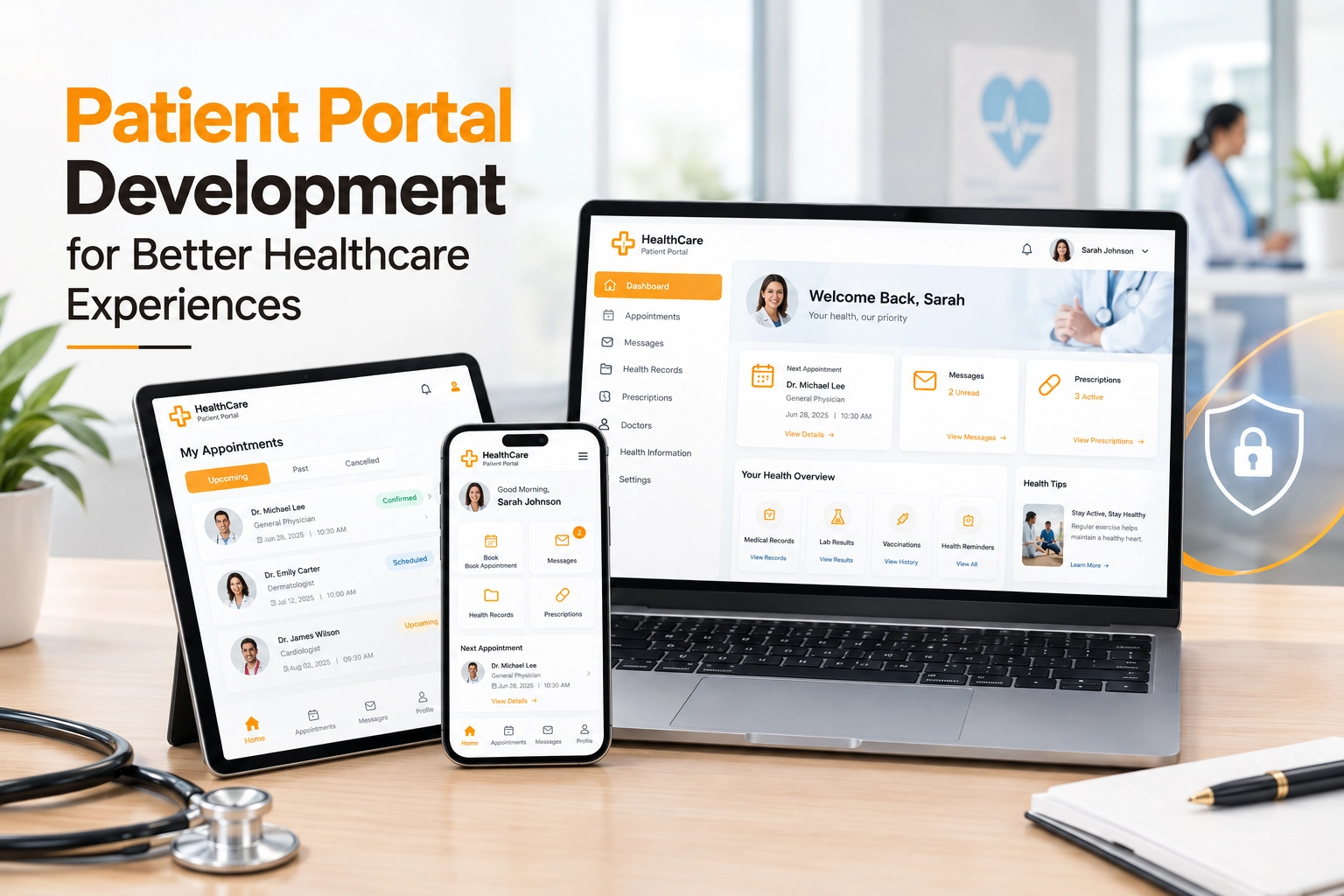
Patients can use secure online portals to access healthcare services anytime.
View Article
The Indian IT job market is not collapsing, and it is not business as usual either. It is splitting in two.
View Article